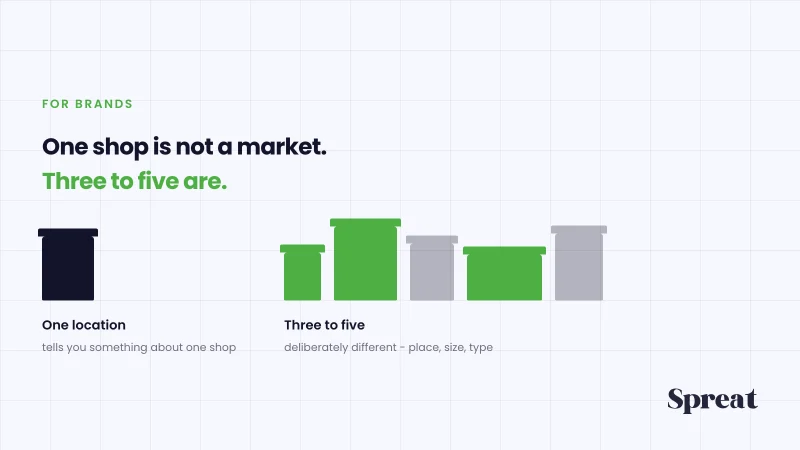
A single shop does not answer whether your product works in physical retail. It answers whether it works in that shop - with that location, that staff, that clientele, that placement. For a decision you need several locations that differ, and enough time that the numbers measure more than the novelty effect.
Three to five locations, deliberately different
The number is craft, not statistics: below three locations you cannot tell an outlier from a pattern. Above five, looking after them gets laborious without the insight growing.
More important than the count is the spread. Three shops of the same kind in the same city are one location in three versions. Take deliberately different ones instead: city centre and residential, large and small, one shop that fits you and one you are unsure about. The second is the instructive one.
How long
At least a full quarter, better a whole season. The first weeks measure the staff's curiosity and the regulars' attention - both flatten out. What happens afterwards is the result.
Spreat has no minimum term - the store can stop at any time, and you can call your goods back at any time. So how long the test runs is your decision, and it should not be shorter than that: any earlier and you cannot tell whether a product is not selling or has simply not been found yet.
Which numbers count
- Sell-through per location per week, not the total - the total hides exactly the difference you set out to find
- How long until the first sale: a product that takes three weeks has a placement or explanation problem, not a demand problem
- Which variant: colour, size, price tier. Often the answer is not the product but one of its versions
- What the staff say: the only figure that is not one - and the one that explains why a location deviates
What a test may cost
That is exactly the question most tests fail on before they start. Through a classic listing a test costs a minimum order, payment terms and usually a co-op advertising contribution - per location. At five locations the insight then costs more than what it answers.
If the goods stay your property until they sell, one more location mainly costs logistics and attention. What else applies is set out in what it costs to be in someone else's store; the routes compared, in the four routes a brand takes into retail.
For a first observation yes, for a decision no. One shop shows you whether your product works there - not whether that was down to your product or to that shop.
At least a quarter, and a full season for seasonal goods. The first weeks measure curiosity, not demand.
Enough that a shelf does not look empty after two weeks, and few enough that resupply stays possible. An empty display distorts the result as much as an overfilled one.
You take it into the more expensive routes. A listing conversation backed by sell-through figures from five shops is a different conversation from one backed by a product presentation.