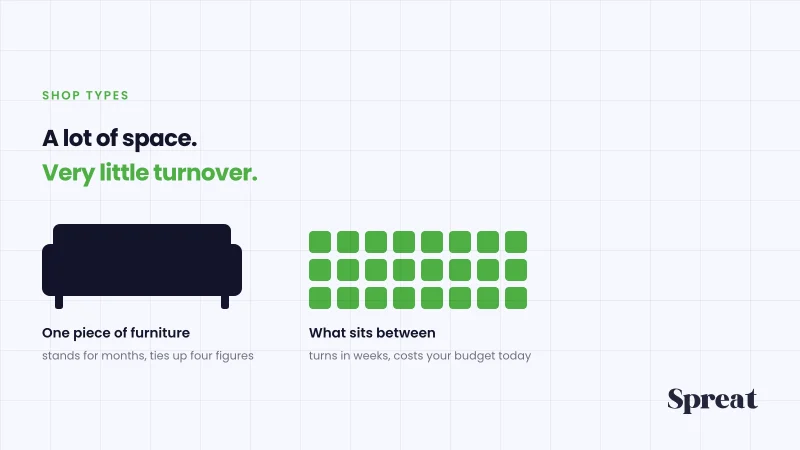
A furniture store has the lowest stock turnover in all of retail and the largest floor. The two hang together: a sofa needs six square metres before anyone can picture it, and it stands for months before somebody buys it. What sits between the furniture - textiles, lamps, ceramics, pictures, scent - turns in weeks.
Why the accessories are what stays thin
Because they compete with the furniture for the same budget, and a single sofa ties up as much capital as a hundred cushions. When liquidity tightens, nobody cuts the display - that is the business - they cut what makes it feel like a home.
How that adds up is set out in tied-up capital in retail and calculating stock turnover. The effect is more pronounced here than in almost any other format.
What changes when the accessories are not yours
If the goods stay the brand's until they sell, another shelf in the show flat costs nothing up front. That shifts two things at once: the display gets more complete without capital being moved around - and the space between the furniture earns something instead of only decorating.
For a furniture store that is doubly interesting, because a well-dressed room demonstrably sells the furniture in it. Until now the retailer carries the cost of that.
Three limits we know about
- Large furniture is not the case. Delivery, assembly, complaints and returns hang together. A sofa that is not yours makes that chain more complicated, not simpler. This is about what somebody can carry out.
- A display is not a warehouse. Goods in a show flat get touched, moved and damaged. Who covers damage on the floor belongs settled before anything is delivered.
- You need a till that plays along. In a store working with order entry rather than a till, that is the first step - see POS integration.
It is not meant to. Delivery, assembly and responsibility after the sale hang together. The model targets carry-out items: textiles, lamps, ceramics, pictures, scent, small furniture.
Exactly what makes it feel lived in and currently comes out of your own budget. The difference is not what stands there but who paid for it.
That belongs settled before the first delivery. In a display things get handled - that is not an edge case, it is the normal case, which is why it belongs in the agreement.
Yes, for a reason small shops do not have: the space between the furniture is there anyway and currently earns nothing.