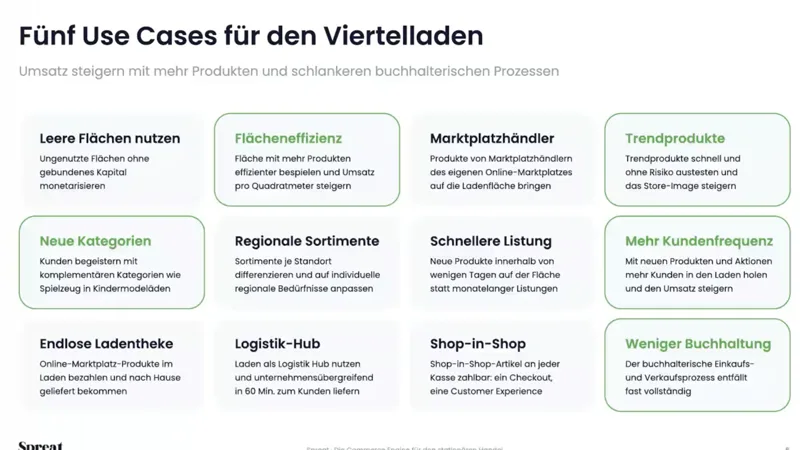
On 20 August 2026, Paul Kirchbichler and Mattis Klöpper joined the fashionconsult web meeting. The hosts were Leo Faltmann and Daniel Schnödt from Trendforum Retail. One hour, half presentation, half open Q&A with retailers from the fashion trade.
The interesting part was less the presentation than what came after. The participants' questions are the same ones we meet in almost every first conversation.
Why a store does not have to buy goods
Retail has worked the same way for thousands of years: buy, then sell. That one step is what ties up capital and creates the risk. Spreat leaves it out.
The goods stay the brand's property. The customer takes them off the shop floor and pays at the till as always. Legally he buys directly from the brand, and the store is paid its retail margin as a commission. That removes the entire buying and selling process on the books for these goods: no incoming invoice, no payment terms, no supplier reconciliation.
The principle is familiar from the internet. Buy on Amazon and you are not buying from Amazon but, through Amazon, directly from the merchant. Spreat brings that marketplace principle to physical retail space - with a patent pending.
What it set off at freenet
In the webinar we showed the freenet project publicly for the first time. Over 500 stores in Germany, prime locations, small floors with heavy footfall. For about four and a half months they have carried products that are going viral on Instagram and TikTok right now.
The assortment is far from the core business: supplements, make-up brushes from beauty creators, three-week tattoos, halal sweets. The brand Miralina sold out six hours into the first day. The plan was for the goods to last two weeks.
- €55
- average impulse purchase
- 6 hrs
- until the first trend brand sold out
- 1.5
- months to break even
- €1,000
- extra earnings per square meter
at freenet
on the project costs
on average
The rollout to the next 200 stores is being planned. And freenet is now extending the model beyond products, to services such as router installation.
Three objections that come up almost every time
“So there is a second till. What does the tax office say?”
You start with a second terminal next to the existing till. That is deliberate: ready to go tomorrow, without an IT project. The brands' sales run through that terminal, not the store's. The store settles a commission, not a sale of goods. For tax purposes it is therefore not a second till belonging to the store.
Once it is clear after a few months how much runs through it, integration into the existing till follows. For some POS manufacturers the connection already exists and can simply be switched on.
“Why don't I just buy the products myself?”
Because then everything the model has just taken away comes back. Buy, and you tie up capital and carry the risk. And buy, and you only get to test once.
With Spreat an assortment changes in days instead of seasons. If a product does not sell, it goes back. If it does, it is restocked. A new brand is in the system in about 15 minutes; after that it is only a matter of delivery time.
“My floor is full. Where is this supposed to go?”
There is usually room. Every retailer knows which ten or twenty square meters perform worse than the rest. And the products do not need a corner of their own.
They can sit alongside the existing assortment, and some brands supply their display with them. It only really gets tight in food retail.
“Retail is change. And whoever can change fastest wins at the end of the day.”
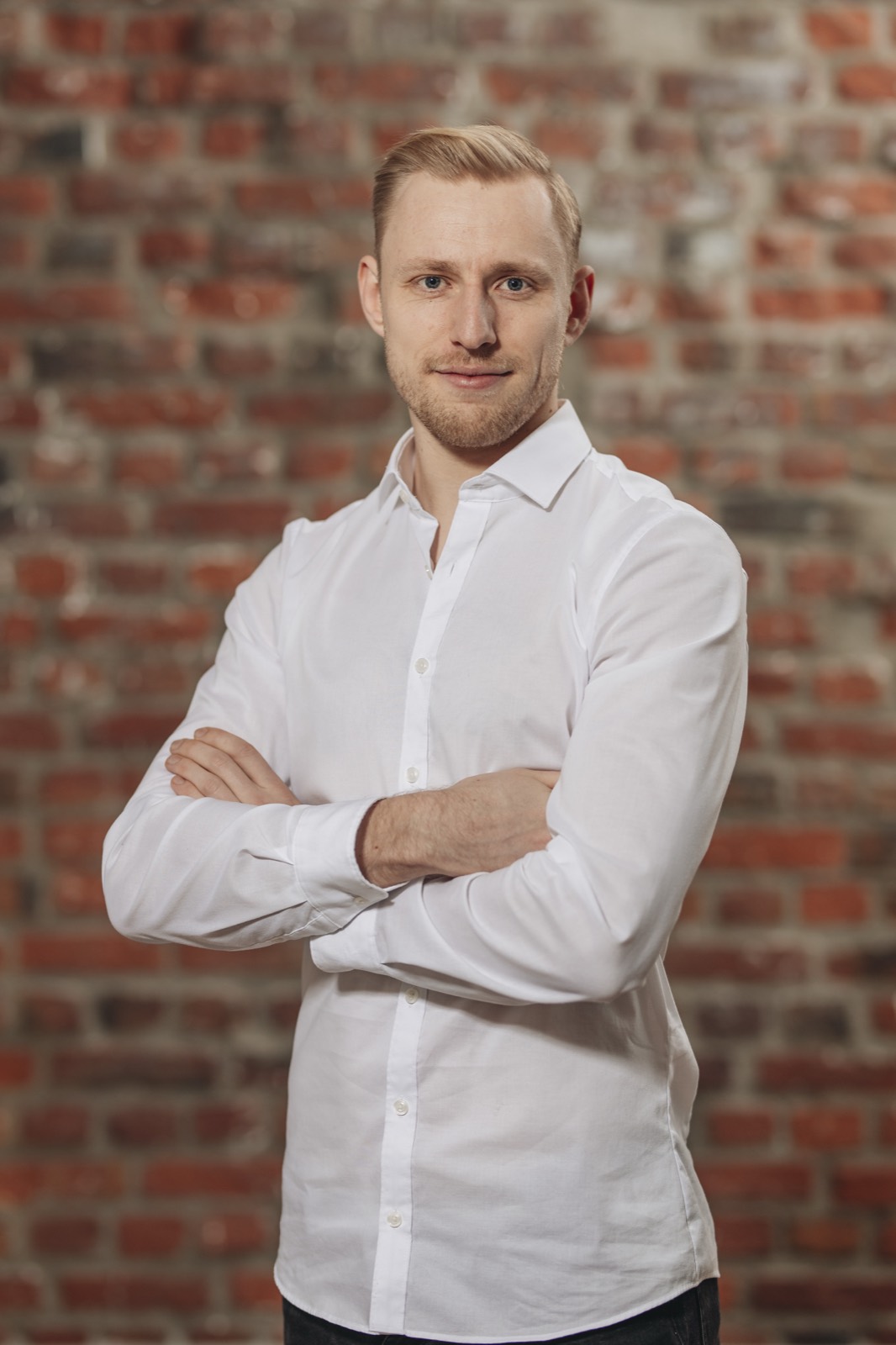 Mattis Klöpperco-founder, Spreat
Where the products come from
Curation stays with the retailer. He decides what comes onto his floor, and we make data-based suggestions. No shop-in-shop, no sublet space: control over the store stays where it belongs.
The Brandpool currently holds over 15,000 products, and it grows every week. If you want a particular brand that is not in it yet, you invite them by link. Registration takes a quarter of an hour.
What it costs
For the store there is a one-off setup fee, starting at €500 depending on size. After that it pays no commission to Spreat.
The money is earned on the brand side: the brand pays the commission to the store and a revenue share to us. Both only once a product goes through the till.
Where the idea comes from
Paul's first company was an online marketplace for sustainable products, founded when he was 16. Many of the makers on it had retail space of their own.
One of them wanted to sell products from the network as well. What it did not want was to buy and settle them. For exactly that problem the internet had long had an answer: the marketplace principle. On the shop floor it did not exist.
“I'm really excited about your idea. Retail is longing for ideas like this, ones that feel futuristic.”